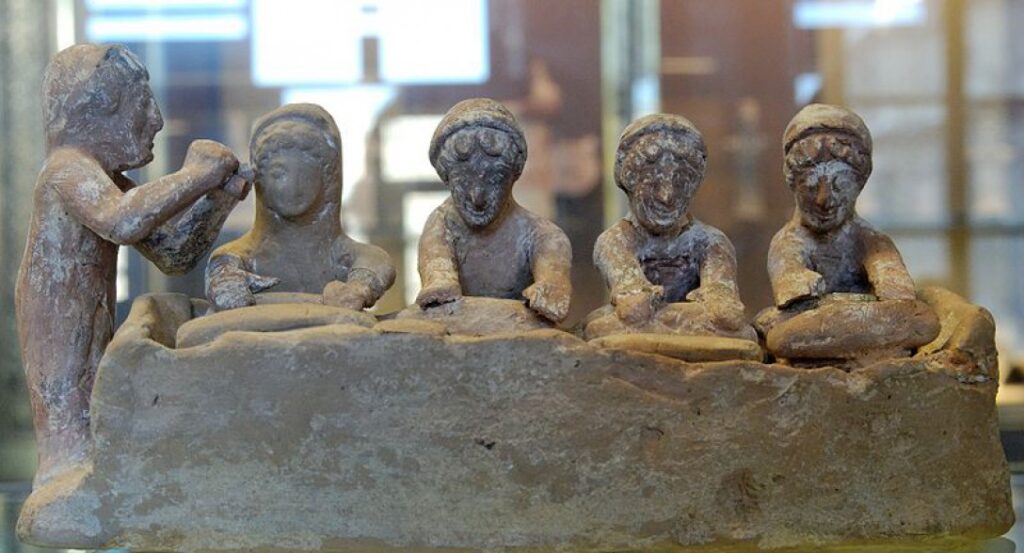

“Mageiros” in Greek means cook (the) and “mageirevo” I cook.
One of earliest attestations of the word is a dedicative inscription by a mageiros in Epidavros (early 5th century, IG, IV2, I.144).
However, the mageiros was not primarily a cook but a man hired to perform the act of slaughter for the animal- sacrifice and roast the sacrificial victim. Since his tasks were extended to reselling the meat and the offals of the carcass he became professional butcher, too. Not long after, the word mageiros included the sense of cook. The mageiros was hired for civic feasts and for private dinners, thus his role combined the sacred, the commercial and the food hedonism. Some mageiroi became so famous that they acted as celebrities for hire.
A characteristic of these inseparable roles (sacrificer/ butcher/ cook) is the use of knife, the ancient Greek machaira, a word etymologically related to the word mageiros.
In ancient Greece the woman could not hold the knife to sacrifice, it is not surprising then that the mageiros was always man.
See also: Sacrifice revisited.






Leave a Reply to Ivy Cancel reply